All Activity
- Past hour
-
Wow!!
-
So what was the problem? I've had bent yoke, bent drive shaft, bad pinion bearing, bent axle, bad U-joint, misaligned drive shaft, incorrectly installed motor mounts, and engine not dial indicated to the bell housing cause vibration. I've had and have Studebakers that vibrate a little at 35 mph. No reason, they just do but that doesn't pertain to an RQB. My son used to be a Mustang fan but they vibrate - they just do. Ford pick-ups are noted for suddenly going into violent convulsions - they just do (and I don't believe the geniuses in Ford engineering ever figured out why. (It happened to me once and it was really scary! Felt like the whole truck was disintegrating around me. Stopped looked over things and started back out and it was just fine and never did it again.
-
Thought I'd just spruce up a bit around the sway bar. Ended up replacing bushings and retainers. It is called mission creep; (you set out to do one simple thing and that leads to another--and another and....
- Today
-
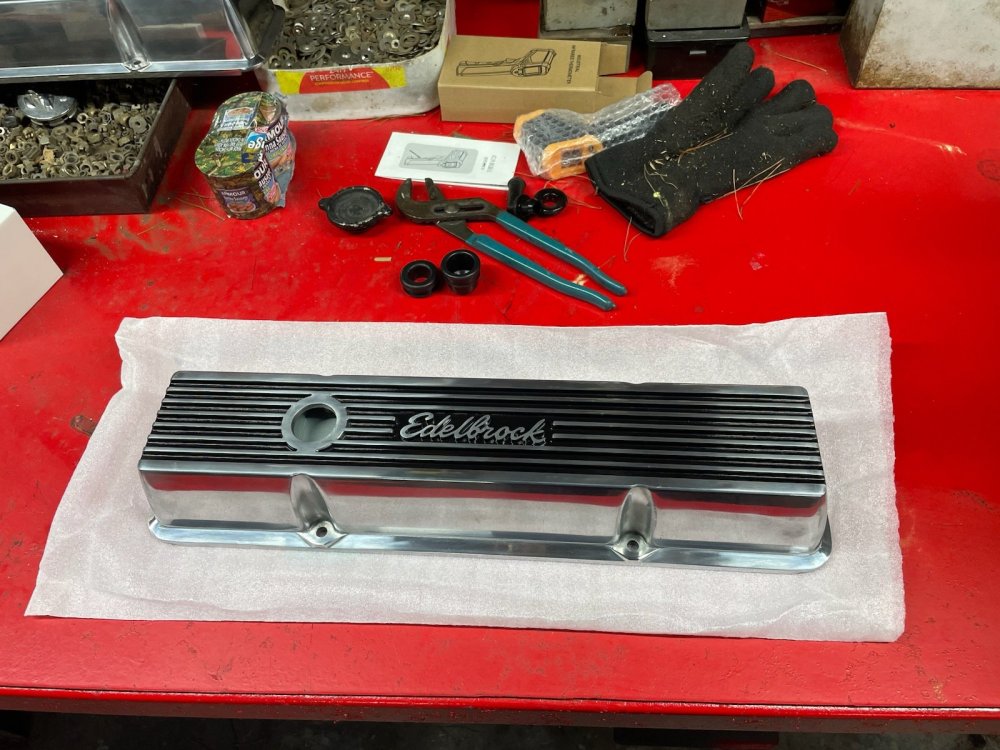
RQB3263/81/305 2026 UPGRADES IN PROGRESS ... ceramic coated flowteck rams horn headers and reducers to be delivered today.... valve covers delivered yesterday very nice but pricey gaskets are extra ......with all the old stuff removed getting new spark plugs is easy also.... checked headbolt torque done..... question .... using these beautiful edelbrock valve covers ...... what do I do for an oil fill cap ?? OEM not compatible.... HAPPY, SAFE, HEALTHY NEW YEAR TO YOU ALL...... BEST WISHES FROM BILL IN CHILLY FLORIDA
.thumb.jpg.3f1cb459200617d1051182a6d40583a2.jpg)
-
Loooong story short: 1) Do your homework and… 2) Keep in mind the old adage…. ’There’s nothing more expensive than a cheap Avanti!!’
-
Bob.. very well stated and sensical. I also agree with Your R2's values and assessment of how they are figured,,, due to condition. Whether we use a 1-10 scale or come at it from a different angle are similar in methodology. There are condition guidelines to follow whether some agree or not. The first thing needed excluded from that process is ''Emotion''. Some disagree wholeheartedly that the Transactions are Business Like. I hold strong to that fact. You can easily get hosed if walking into a deal with an emotional bent and a "Gotta have it!" attitude. Thanks Bob
-
Here’s a method that should work for many who want to determine a dollar value for a classic car. This isn’t a breakthrough discovery as I’d imagine that most use something similar even if they’re not aware of doing so. The objective is for an individual to put a value, in dollars, on a particular vehicle. This is a cold hearted calculation where the variables of emotions, sentiments and virtuosity are excluded. The first step is to establish a standard for the condition of the vehicle one would like to achieve. It could be concourse level, a decent car for local shows, a solid driver or a smoke spewing rattle trap with a family of raccoons in the back seat. Once we have the standard a dollar figure can be determined by analyzing recent sales. As an example, recent sales of ‘63-‘64 R2’s have topped out in the mid-$50’s. Less recently a couple sold in the $70’s. Based on photos and descriptions these cars would fit in the “decent car show category”. It would be reasonable to conclude that such a vehicle would have a value of $55K-70K, with the differences possibly being a flawless paint job compared to one with a few blemishes or perhaps a 4-speed vs automatic transmission. Regardless, we’ve established what could be called a reasonable maximum potential value for a particular model in a generalized specific condition. From here, the next step would be to calculate the cost to bring a subject vehicle up to the established standard. For some it may be $3000 in parts and materials and 2 months of their free time in the garage. For others it may be the same cost for parts plus $10,000 for someone else’s labor. In this example, the DIY buyer may be willing to pay more for the subject vehicle than the buyer who will need to farm out the work. This is just a look from a buyers perspective. Also keep in mind that you can’t pay too much for the right one but you can pay too little for the wrong one.
-
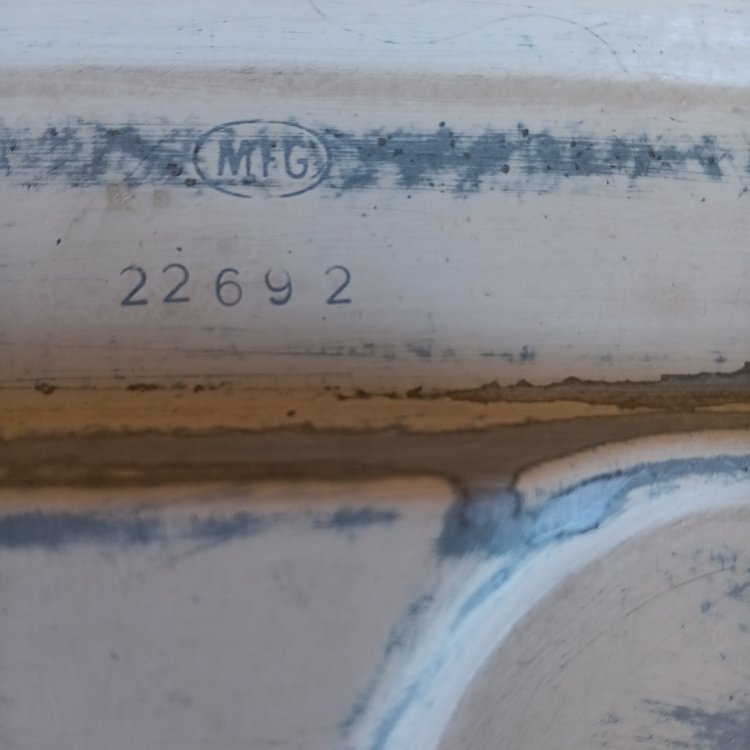
That's cool. Molded Fiber Glass (MFG) was the company in Ohio that was initially contracted to make the Avanti bodies for Studebaker.
-
That, and all the emission controls.
-
The issue the wiper system in my ‘63 has is….wipers do not go into ‘park’ mode.. When I turn knob to ‘off’ the wipers stop wherever.. and I have to ‘catch’ them at base of windshield before quickly turning knob to ‘off’… I’ve owned this Avanti for 35 years and this problem is something new.
-
Wow!…. I have to admit my ‘63 never sees rain, and the last time I tried wipers was at annual motor vehicle inspection… (which I suppose could be part of the problem… lack of use!) But if I remember correctly all the way to left is ‘off’, with wiper speed increasing as knob is rotated clockwise. ( please correct me if this doesn’t sound right)
-
Is the switch action correct? Starting at far counter clockwise left: High>Off>Low?
- Yesterday
-
I have a 67 Avanti II with AC. It has 1 7/8” of spacers on both sides in the front. The wheel well openings are about 2” lower than the openings on my 63.
-
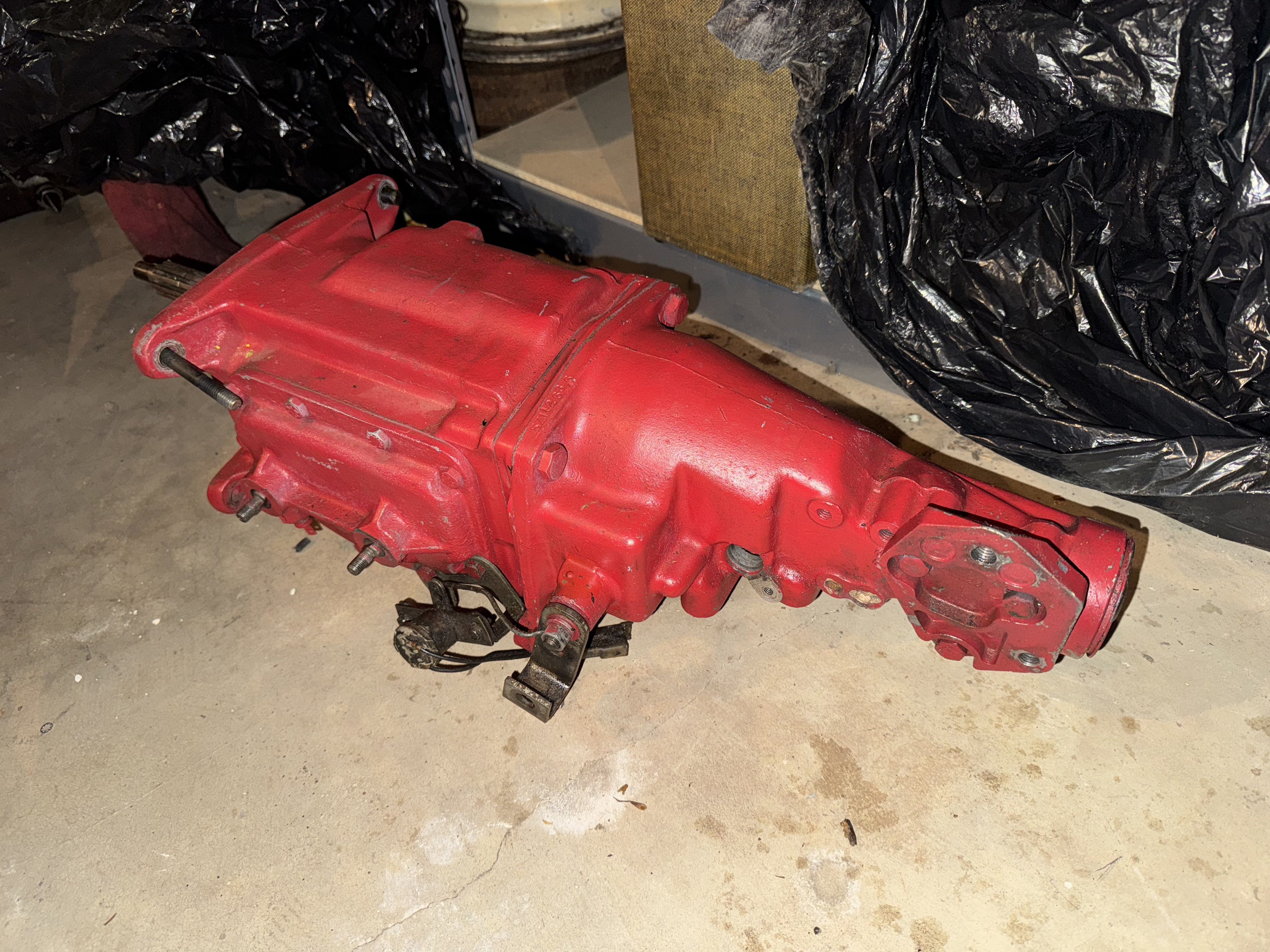
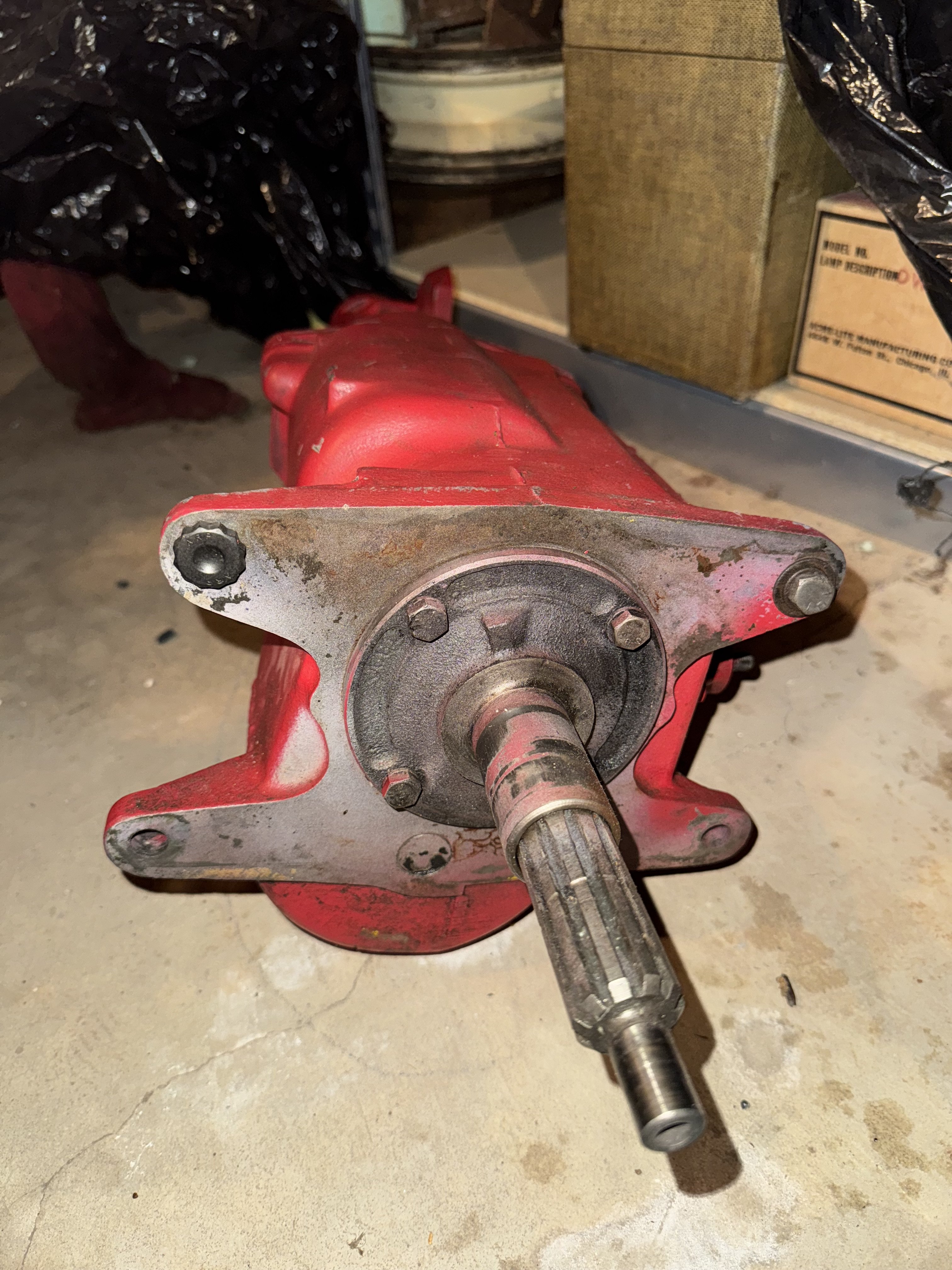
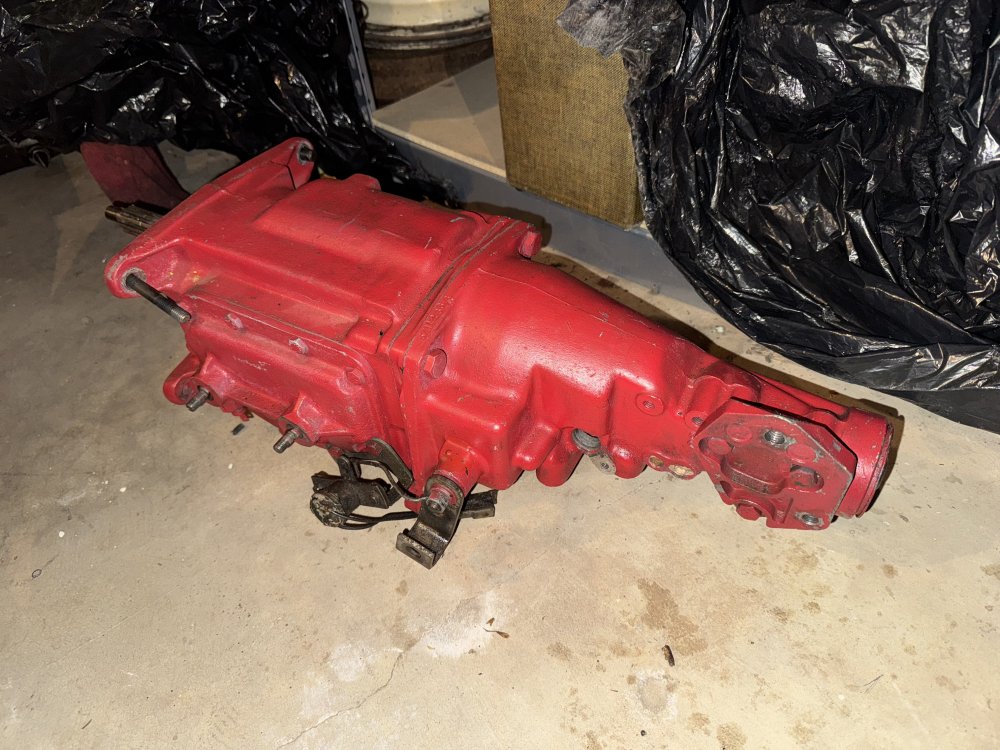
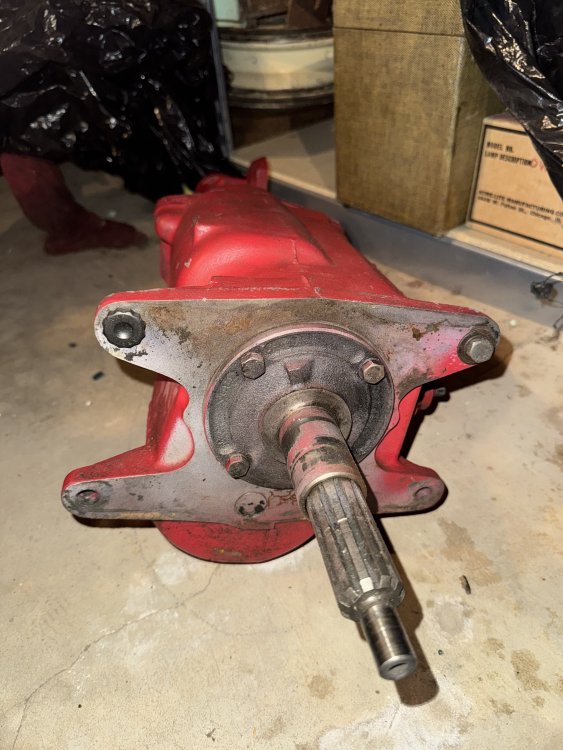
the guy I got this from wanted an auto trans in his '72 Avanti. this transmission and bell housing are now in France going into another Avanti II that had an auto transmission. I was going to use this in my '63 Avanti, but went with a Tremec TKO500
-
1972 Avant ll’s with standard transmissions… Rare birds!!
-
Here is the picture of the T10 that came out of a 1972 Avanti
-
thanks for your answer , can you put a picture about it😊 Thanks
-
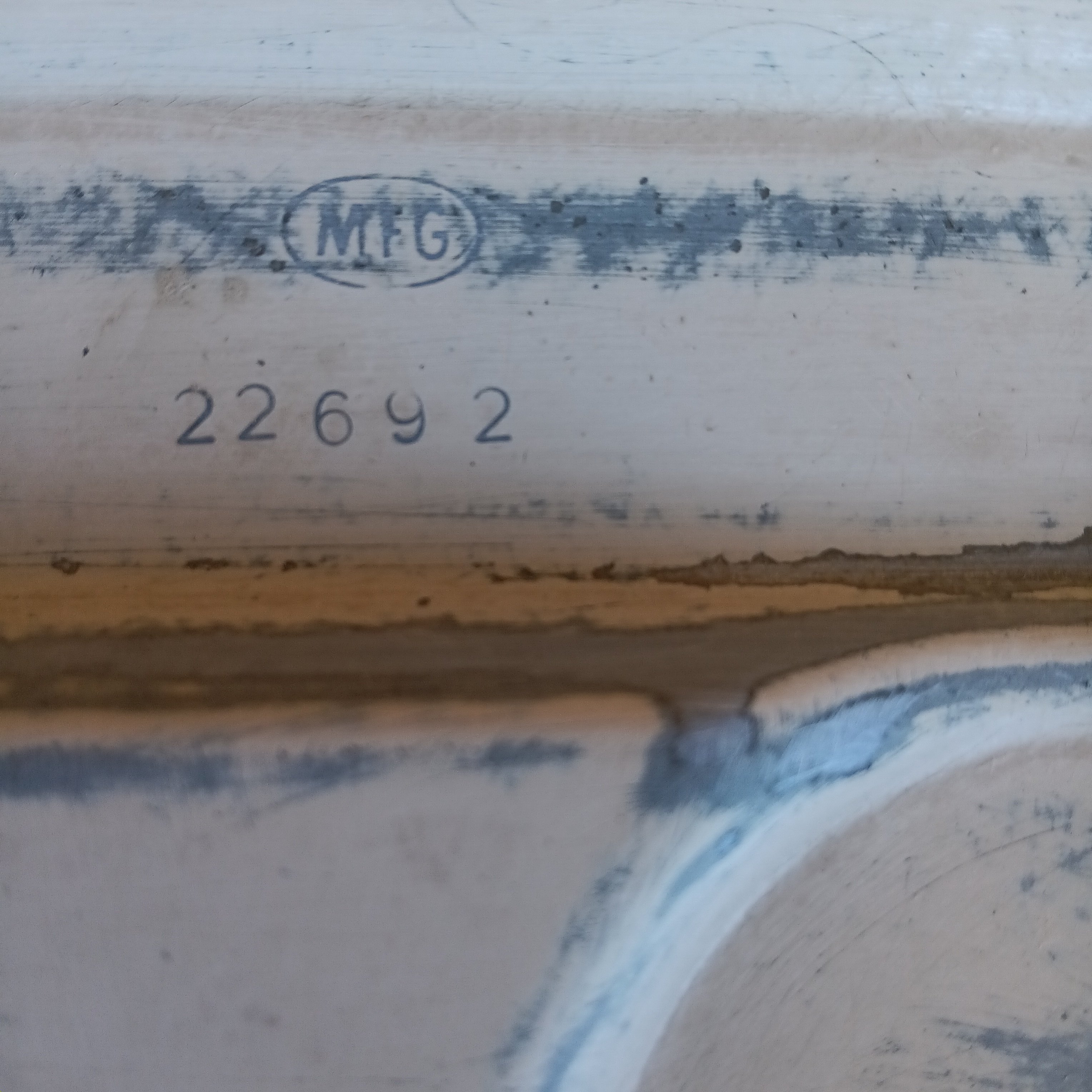
Yes, that’s me ‘mfg’… and 22692 has always been my lucky number.
-
False is correct!
-
I have one from a 1972 Avanti and the color looks like it is Chevy orange, same as the engine.
-
Someone posted a photo of markings in glove box vanity, I found these markings on glove box door.
-
Based on Bob Johstones Studebaker Resource website, it would say False. According to his information, the front was raised 3". At least 3" above the front wheels and the front fender. Newman - Altman spent 1965 re-engineering the car for the GM engine, upgraded upholstery and other amenities. There were no official 1965 models. Any cars titles as a 1965 are rare, most are regarded as '66' models. In '65, the R-series engine options under Studebaker also disappeared and the vehicle numbering system went from "R-xxxx' to 'RQA-xxxx'. They adapted the GM 327 Cubic inch/300 HP through a custom bellhousing and coupled it to the existing Powershift (FMX type) transmission. The remainder of the car stayed, as Studebaker had produced it, with the exception of the emblems.< The installation of the new engine required the body to be pivoted upward in front, in order to accomodate its dimensions. This was accomplished by using varying thicknesses of steel shims along the frame mounting points. The resulting, additional, three inch gap between the fender and top of the wheel was remedied by installing filler pieces at the top of the wheel opening.
-
 Wally Ritter joined the community
 -
I’ve heard that before… I think part of the problem there is that the later Avanti ll’s were hamstrung with a really ‘tall’ rear axle ratio, which greatly hurt off the line performance.
-
 erniebrown changed their profile photo
 -
Good thoughts Gunslinger. Thanks
-
Re; mfg post. The hawk rear brake is 'self energizing' The Avanti, while slightly larger, is not. That makes the Hawk brake much more efficient. I'm not sure why they did this; I can only guess that the Dunlop discs in the front require a huge amount of pressure and therefore a good, functioning power brake booster. (One of the first things you must learn as an Avanti driver is NEVER tailgate!) Perhaps the engineers were seeking balance with the less-than-good rear brakes. (The power booster would compensate for the systems deficiencies - but then the used a kinda not-so-great booster.)


.jpg.8962f8c7a2221b8d693732cdda2ef6e2.jpg)